
WELCOME BONUS 300%
UP TO €2000 + 100
FREE SPINS
UP TO €2000 + 100
FREE SPINS
Home → Games
Casino games at Casino-Winshark
Video Poker: check payout table before betting
The Jacks or Better 9/6 (Full Pay) variant of Video Poker offers a Return to Player (RTP) of 99.54%, with a house edge of 0.46%. This specific payout table, where a Full House pays 9 coins and a Flush pays 6 coins per one coin wagered, is crucial for achieving this high RTP. Players must wager a maximum of 5 coins to qualify for the Royal Flush bonus of 4000 coins.
Lower paying versions of Jacks or Better exist, such as the 8/5 variant, which has an RTP of 97.29% and a house edge of 2.71%. The difference in payout for a Full House (8 coins) and a Flush (5 coins) significantly impacts the overall return. Understanding these differences is key to selecting the most favourable game.
To maximise potential returns, players should always consult the specific payout table displayed on the machine. For Jacks or Better 9/6, optimal strategy is required to achieve the stated 99.54% RTP. Deviations from this strategy can lower the RTP below 99%.
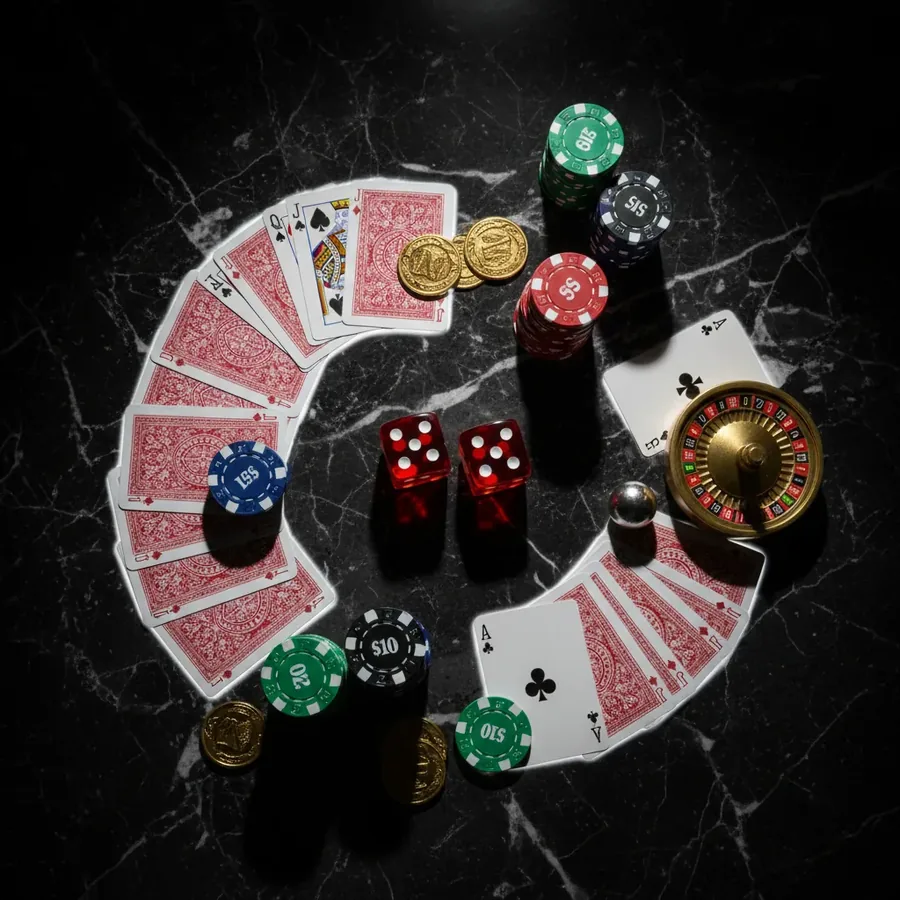
Straight, Split, and Corner: Three Terms Briefly Explained
In French Roulette, a 'Straight' bet on a single number offers a payout of 35:1, contributing to a theoretical RTP of 97.30% when La Partage does not apply to inside bets. The house edge for this game remains at 2.70%, consistent with European roulette rules, due to the single zero.
A 'Split' bet, covering two adjacent numbers, pays 17:1 in French Roulette. Similarly, a 'Corner' bet, covering four numbers, pays 8:1. These inside bets are part of the game's structure, with the RTP remaining at 97.30% as long as the wheel has 37 sectors and no special rules apply to these specific wagers.
The structure of the roulette wheel, with 37 sectors, dictates the odds for all inside bets. While the payouts for Straight, Split, and Corner bets vary, the overall house advantage for French Roulette is consistently 2.70% for inside bets where La Partage does not apply, impacting the long-term player return.
Jacks or Better: Check Payout Table Before Betting
The Jacks or Better Video Poker variant, specifically the 9/6 'Full Pay' version, boasts a high RTP of 99.54%, with a house edge of only 0.46%. This favourable payout structure, where a Full House pays 9 coins and a Flush pays 6 coins for each coin wagered, is essential for players aiming for optimal returns.
Choosing a Jacks or Better machine with a 9/6 payout is significantly more advantageous than one with an 8/5 payout, which has an RTP of 97.29%. The difference of two coins on a Full House and one coin on a Flush represents a substantial increase in the game's theoretical return to player.
To ensure the best possible outcome, it is imperative for players to verify the payout table before placing any bets. For Jacks or Better 9/6, achieving the 99.54% RTP is contingent upon playing with optimal strategy and always wagering the maximum allowed coins to secure the highest Royal Flush bonus.
Martingale Fails After 8 Rounds at Table Limit
Roulette, particularly American Roulette with its 5.26% house edge, presents challenges for betting systems. A system like Martingale, which involves doubling the bet after each loss, can be severely impacted by table limits. For instance, after 8 consecutive losses, a starting bet of €1 would escalate to €256.
The rapid increase in bet size in the Martingale system can quickly reach the table's maximum limit. Assuming a typical table limit of €500, a player employing Martingale would be unable to place the required bet after the 8th round if their initial wager was €1 and they experienced 8 consecutive losses.
This limitation means that even with a theoretically infinite bankroll, the Martingale strategy is vulnerable. The house edge of 5.26% in American Roulette, combined with table limits, makes prolonged use of such systems unsustainable and likely to result in significant losses.
Punto Banco: 5 Percent Commission on Banker Wins
In Baccarat, specifically the Banker bet with 8 decks, a commission of 5% is applied to winning bets. This results in an effective payout of 0.95:1 for Banker wins, while the Player bet offers a straight 1:1 payout. The Banker bet, despite the commission, maintains a superior RTP of 98.94%.
The house edge on the Banker bet is 1.06%, making it the most favourable main bet in Baccarat. This edge is calculated after accounting for the 5% commission, which effectively reduces the payout from a true 1:1 to 0.95:1, balancing the Banker's statistical advantage.
While the Player bet offers a slightly higher RTP of 98.76% with no commission, the Banker bet's 1.06% house edge remains lower than the Player's 1.24% house edge. This is due to the 5% commission on Banker wins, making it the statistically superior choice for players.
Game categories at a glance
| Category | Examples | Stakes From | Highlight |
|---|---|---|---|
| Slots | Legend of Cleopatra Megaways, The Dog House, Sun of Egypt 3 | 0,10 EUR | thousands of titles |
| Table games | Roulette, Blackjack, Baccarat | 0,50 EUR | classic rules |
| Live casino | Auto Roulette Classic 1 Live, Casino Hold'em | 0,20 EUR | real dealers |
| Jackpot games | Mega Moolah, Divine Fortune, Age of the Gods | 0,20 EUR | progressive pools |
| Instant games | Aviator, Plinko, Mines | 0,10 EUR | fast rounds |
| Video poker | Jacks or Better, Deuces Wild | 0,25 EUR | strategy based |
37 vs. 38 Sectors: One Zero Difference
American Roulette features 38 sectors, including both a single zero and a double zero (00). This contrasts with European Roulette's 37 sectors, which only has a single zero. The payouts for inside bets remain the same across both variants, such as 35:1 for a straight bet.
The additional '00' sector in American Roulette significantly increases the house edge. While European Roulette has a house edge of 2.70%, American Roulette's edge rises to 5.26%. This difference directly impacts the player's theoretical return to player (RTP).
This means for every 100 EUR wagered on American Roulette, a player can expect to lose 5.26 EUR on average over the long term, compared to 2.70 EUR on European Roulette. The standard payout for a red or black bet is 1:1 in American Roulette, also affected by the extra zero.
Video Poker 9/6: What the Two Numbers Mean
Video Poker Jacks or Better 9/6 refers to the payout ratios for specific hands, namely 9 coins for a Full House and 6 coins for a Flush, per one coin wagered. This specific paytable is often referred to as 'Full Pay'. The game requires a maximum bet of 5 coins to achieve the highest payout for a Royal Flush.
This 9/6 paytable results in a Return to Player (RTP) of 99.54% when played with optimal strategy. The house edge is therefore 0.46%. This offers a significantly better return compared to other Jacks or Better variants, such as the 8/5 version which has an RTP of 97.29%.
A deviation from the optimal strategy can reduce the RTP below 100%. The standard deviation for Jacks or Better 9/6 is 4.42, indicating a moderate level of volatility in payouts over numerous hands.
Split, Double, and Surrender: Three Decisions Explained
In Blackjack, splitting pairs allows a player to divide two cards of the same rank into two separate hands, each receiving an additional card. Doubling down permits a player to double their initial bet after seeing their first two cards, receiving only one more card. Surrender offers the option to forfeit half of the bet and abandon the hand before the dealer checks for blackjack.
These rule variations can impact the overall house edge. For instance, the rule where the dealer Hits Soft 17 increases the house edge by 0.22 percentage points. Conversely, rules like Resplit Aces can improve the RTP by 0.08 percentage points.
The decision to double down involves doubling the stake for a single additional card, and splitting allows for up to four hands. For example, the availability of Double After Split improves the RTP by approximately 0.14 percentage points.
What doesn't count: bets over 5 EUR
When a bonus is active, not all wagers contribute equally to fulfilling the wagering requirements. Bets exceeding 5 EUR on any single game round are specifically excluded from counting towards bonus turnover. This rule is crucial for players aiming to convert bonus funds into withdrawable cash.
The contribution rates for different game types are also defined. Slots contribute 100% towards wagering, meaning every euro wagered counts fully. However, table games, which include options like Casino Hold'em Ante + Call, only contribute 10% of the wagered amount.
Therefore, a player betting 10 EUR on a slot game will have 10 EUR count towards their wagering requirements. The same player betting 10 EUR on Casino Hold'em would only have 1 EUR count, assuming the bet is not over the 5 EUR limit.
How Much Does One Mistake Cost in 100 Hands?
Even a single deviation from optimal strategy in Video Poker Deuces Wild — Full Pay can significantly alter the Return to Player. This specific variant offers a theoretical RTP of 100.76% with flawless play and maximum bet, effectively giving the player a positive expected value.
However, a small mistake can easily push the RTP below 100%. For example, if a player misses playing all four Deuces and achieves 'Four of a Kind' instead of a 'Wild Royal' or 'Five of a Kind', the payout difference is substantial.
In Video Poker Deuces Wild — Full Pay, 'Five of a Kind' pays 15, while 'Four of a Kind' pays 5. This reduction in payout can cost a player dearly over 100 hands, potentially turning a positive expected return into a loss.
Before Double Down: read the open dealer card
The Double Down maneuver in Blackjack allows a player to double their initial bet after receiving their first two cards. However, this decision should be informed by the dealer's upcard. A dealer showing a 10 or an Ace presents a higher risk for the player, making a Double Down less advisable in such scenarios.
Blackjack Insurance, a side bet offered when the dealer's face-up card is an Ace, has a theoretical RTP of 92.53% with a house edge of 7.47%. This bet is generally not recommended, as basic strategy dictates always refusing it, except for advanced card counters when the true count is +3 or higher.
Understanding these strategic elements is crucial for players aiming to minimise the house edge. While the main bet in Blackjack can offer a favourable RTP depending on the rules and strategy employed, side bets like Insurance often carry a significantly higher disadvantage for the player.
Double Down: Doubling Your Bet After Two Cards
The Double Down option in Blackjack permits a player to double their initial wager after the first two cards are dealt, receiving only one additional card. This strategic move is best employed when the player's hand is strong, typically a total of 9, 10, or 11, and the dealer's upcard suggests a lower probability of them achieving a strong hand.
Specific rule variations can impact the effectiveness of a Double Down. For instance, 'Double After Split' (DAS) improves the player's advantage by approximately 0.14 percentage points, making it a more favourable situation to consider doubling down. The ability to double down on any two cards, as opposed to just 9, 10, or 11, also enhances player options.
The optimal use of Double Down is intrinsically linked to the dealer's visible card and the player's hand total. For example, hitting a 10 against a dealer's 5 or 6 is a prime opportunity for a Double Down, significantly increasing potential winnings if the final card is a 10.
Pass Line in Craps: Process in Four Steps
The Pass Line bet in Craps is a fundamental wager where players bet on the shooter rolling a 7 or 11 on the come-out roll. If a 2, 3, or 12 is rolled, the Pass Line bet loses. Any other number rolled establishes a 'point'.
Once a point is established, the shooter must roll that same point number again before rolling a 7 for the Pass Line bet to win. A roll of 7 results in the Pass Line bet losing, demonstrating the inherent house advantage of 1.41% on this bet.
The Pass Line bet is a straightforward introduction to Craps gameplay. While the initial roll offers immediate win or loss possibilities, the subsequent phase of trying to hit the established point before a 7 introduces a dynamic element to the game's progression.
Minimum deposit 20 EUR, table games count 10 percent
A minimum deposit of 20 EUR is required to activate bonuses at this casino. It is important to note that contributions to wagering requirements differ significantly across game types. Slots contribute 100% towards meeting these requirements, offering the quickest path to unlocking bonus funds.
Table games, including popular options like Blackjack and Roulette, contribute only 10% towards the wagering requirements. This means that for every 10 EUR wagered on a table game, only 1 EUR counts towards fulfilling the bonus conditions.
This disparity in contribution rates means that players focusing on table games will need to wager substantially more to clear their bonus compared to those playing slots. For example, a 300% welcome bonus up to €2,000 requires careful consideration of game selection to meet wagering targets efficiently.
Craps: Pass Line plus Odds lowers the average
The Pass Line bet in Craps has a house edge of 1.41%. However, players have the option to place an 'Odds' bet after a point has been established. This additional wager is placed behind the Pass Line bet and pays out at true odds, meaning it carries no house advantage.
When Craps is played with the 'Free Odds' bet, particularly with multipliers like 3-4-5x, the combined house edge of the Pass Line plus Odds bet is significantly reduced. The Free Odds bet itself boasts a 100.00% RTP, making it the only wager in the casino with a 0.00% house edge.
By strategically utilising the Pass Line bet in conjunction with Free Odds, players can substantially lower their overall average wagered amount lost to the house. For instance, the combined RTP for Pass Line with 3-4-5x Odds is 99.63%, demonstrating the advantage of this betting combination.
Contact
Live - online chat
Banking









Providers












Winshark Casino 2026